


casino non aams: when a bonus clause holds your withdrawal
A withdrawal sits in pending status and the site cites the bonus terms as the reason it cannot release the funds. The most common trigger is an unmet wagering requirement, but the exact condition depends on which games you played and how much you wagered. Wagering requirements apply to the amount of the bonus, and sometimes to the deposit plus bonus, so the same multiplier produces different turnover targets.
Terms and conditions specify the contribution rate per game type. Slots typically count fully, while table games and video poker may count at a reduced rate or not at all. Live dealer games are frequently excluded entirely. Playing a low-contribution game inflates the time needed to clear the bonus without reducing the locked balance.
Casino Tropez | Mobile access and account safety checks
Two further conditions shape the outcome. First, the maximum bet rule: most bonuses cap wagers at $5 per spin or hand while the bonus remains active, and exceeding the cap voids the bonus and any winnings. Second, the time limit: bonuses usually expire between 7 and 30 days, and the clock starts when you claim the offer. Read all four conditions—wagering target, game contributions, bet cap and expiry—before accepting a bonus, because they together determine whether it is worth the effort.
See also:
- What the non-AAMS label actually means
- Operator comparison: operator details, games
- Sonbahis: international bookmaker with no Canadian regulatory licence
- How Shotz delivers games through operator partners
- What Odeonbet is and is not a good fit for
- How Paradise 8 operates in Canada: international licence, no local regulator
- Blitz: Operator details
- Why Canadian authorization is a separate question
- Casino mechanics do not improve because of the label
- Before opening an account, check the whole path
- The relevant conclusion
- Frequently asked questions
- What responsible-gambling tools a casino actually offers
What the non-AAMS label actually means
AAMS was the name used by the Dutch gambling regulator that the label is intended to reference. The phrase “non-AAMS casino” is therefore usually a description of regulatory position, not a licence class of its own. It may mean that an operator lacks Dutch authorization, operates under another foreign regime, uses a different corporate structure, or is simply being characterized that way by the person making the claim. Without more detail, those possibilities are not interchangeable.
Casino live bet | timing latency dealer interaction
The label also leaves an important blank: it says nothing about the operator’s legal identity. A casino website may display a company name, a domain and several payment brands, yet those details do not necessarily reveal which legal entity holds the licence, whether the entity is active, or whether it is permitted in Canada. Corporate registration in one country can support cross-border operations, but registration is not the same thing as permission to offer online casino games to residents of another jurisdiction.
This is where a misleading shortcut often begins: if a site is not called an AAMS casino, it is treated as either automatically suspect or automatically acceptable. Neither conclusion follows. Dutch authorization cannot be used as a substitute for Canadian authorization, while the absence of Dutch authorization is not itself proof of fraud, unfair games or unlawful operation everywhere. The correct analytical move is to separate four questions: Who operates the site? Which regulator authorizes whom? In which jurisdiction? And does that permission extend to the player’s province?
The difference between a description and a regulatory status
A description such as non-AAMS is open to interpretation. A regulatory status should identify the supervising authority, the operator or legally relevant entity, the permitted activity and any geographic limitations. Even a genuine foreign licence answers only a bounded question. It can establish that a regulator issued permission within that regulator’s jurisdiction; it cannot automatically establish that the same permission is valid in Canada.
The same principle applies to terms that may sound more substantial. An ISO certificate, company registration, geolocation technology or random-number-generator testing report may address one operational issue. None replaces the separate question of authorization to serve the Canadian province where the player lives. Useful evidence is specific about scope: a game-testing certificate is not a licence, and a corporate registry entry is not customer permission to gamble locally.
Operator comparison: operator details, games
Sonbahis and Shotz raise different questions here, from operator credentials to game selection.
| Brand | Details |
|---|---|
| Sonbahis | Sportsbook + casino; Curacao licence claimed; no Canadian provincial licence; possible geoblock. |
| Shotz | Aggregator and game-provider brand for Canada; localized and CAD-ready; content delivered via operator partners. |
| Odeonbet | Combined sportsbook and casino; sports focus plus live and virtual options; CAD deposits and withdrawals with method-based caps. |
| Paradise 8 | International RTG casino, live since 2004; no Canadian regulator licence. |
| Blitz | Blitz operates as both an online casino and a sportsbook under the Kahnawake Gaming Commission licence. |
The selection at Shotz matters most if it includes the kind of play you have in mind.
Sonbahis: international bookmaker with no Canadian regulatory licence
Sonbahis is a bookmaker and casino brand offering sports betting, live in-play markets, slots, table games, and live dealer rooms from a single account. Its marketing claims a Curacao eGaming licence, which is a common arrangement for international operators targeting markets with loose regulation. For Canada the important fact is that Sonbahis does not hold a licence from a Canadian regulator such as AGCO in Ontario, and may be blocked or unavailable to users in some provinces because of geolocation restrictions. Services are therefore not regulated by Canadian law, which affects both dispute resolution and the level of consumer protection available. The betting and casino products function normally, but the regulatory envelope around them is the weaker part of the proposition for a Canadian player.
How Shotz delivers games through operator partners
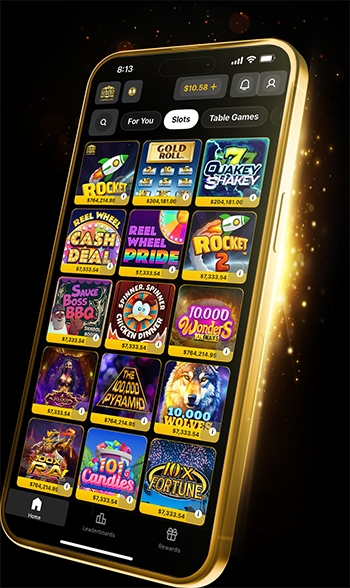
The result of Shotz being an aggregator shows up in how its catalogue is assembled. Instead of negotiating one game at a time, the platform signs deals with multiple providers and serves their slots, table games, and live dealer tables to its operator customers. For a player this means a wider selection than a single-operator site can justify buying on its own, but it also means the experience — registration, payment options, bonus rules — is defined by the operator site you visit. Shotz’s own contribution is the platform infrastructure and the localisation work that lets partners offer CAD balances and meet regional rules. If you encounter a Shotz-powered site, the relevant check is not the aggregator’s marketing but the operator’s account terms, because those determine your minimum deposit, withdrawal limits, wagering, and whether your preferred payment method is supported.
Club Regent Casino events | costs, wagering rates
What Odeonbet is and is not a good fit for
The trade-off behind Odeonbet’s wide coverage is that its depth differs sharply by product. Sports betting carries extensive pre-match and live markets, live streaming for selected events, and cash-out, but the casino side leans on a broad instead of deep slot and table selection and offers a more limited live dealer lineup than specialist casinos. Wagering rules reinforce this asymmetry: bonus funds usually must be turned over 30x to 40x before withdrawal, with slots at 100% contribution and blackjack sometimes at just 5% to 10%, so playing the wrong game makes the requirement take much longer. Cashout also depends on your account standing — first-time withdrawals may trigger extra checks before funds leave. For a player deciding where to put most of their bankroll, the honest answer is that Odeonbet works well as a combined account for sports with occasional casino play, not as a destination for serious live casino volume.
How Paradise 8 operates in Canada: international licence, no local regulator
The licensing point matters more than the age of the brand. Paradise 8 holds a Curaçao licence and does not hold one from any Canadian regulator, including AGCO or a provincial commission. The site accepts players from Canada and other countries, but it is not governed by Canadian gambling law. That changes what a player can expect if a dispute arises over a payout or an account decision, because there is no local regulator to appeal to. Treat access as convenient instead of as a guarantee of local protection.
Blitz: Operator details
Blitz operates as both an online casino and a sportsbook under the Kahnawake Gaming Commission licence. Registration gives you access to casino games and a sports betting catalogue listed under the operator’s own menu.
Why Canadian authorization is a separate question
The label "non-AAMS" describes where a casino is not registered. It says nothing about whether the site is authorized to accept players from Canada. A casino can sit outside the Italian register and still be blocked for Canadian residents, or it can hold a Canadian provincial licence and be irrelevant to the Italian list. The two questions answer different problems.
| What the check confirms | What it does not confirm for a Canadian player |
|---|---|
| Whether an operator appears on or outside the Italian AAMS register | Whether the site is licensed to serve Canada |
| Which national regulator the operator answers to | Whether deposits, games or withdrawals are legal in the player’s province |
| That a specific registry exists for another country | That Canadian consumer protection or dispute channels apply |
The result shows up in the payment step. A non-AAMS casino might list Interac, e-Transfer or Visa without any Canadian licensing behind those options. That combination looks convenient until a withdrawal stalls and the operator has no Canadian authority to hold it accountable. The licence that matters is the one issued by the province or territory where the player physically sits, or by a regulator whose enforcement reaches that province.
A registry entry is a starting point, not a verdict. Check the licence number printed on the site, then confirm it against the Canadian provincial gaming board instead of against an Italian list. If the operator only publishes a licence from a jurisdiction that does not enforce Canadian consumer rules, the non-AAMS status adds no value for a player in Canada.
Casino mechanics do not improve because of the label
The word non-AAMS has no mechanical connection to the random process behind a game. A regulatory label can help identify oversight, but it does not cause symbols, numbers or cards to produce better returns. What determines the game mechanism is the product and its published specifications. Those specifications should be assessed separately from both Dutch status and Canadian authorization.
RNG, RTP and house edge answer different questions
A random number generator, or RNG, is the mechanism that produces unpredictable game results after the player starts a round. It does not decide how often a player wins across one session. Even a properly functioning RNG can produce an early win, a long sequence of losses or a result that differs sharply from the long-run average.
Return to player, commonly called RTP, is a theoretical percentage that describes the proportion of wagered money a game returns over a sufficiently large number of plays under its stated rules. It is not a session guarantee. A hypothetical 96% RTP game, for example, means that the mathematical expectation across a very large volume of wagers is to return 96 currency units for every 100 wagered. It does not mean every 100-credit session will finish with 96 credits, and it does not turn a loss into a guaranteed recovery.
The house edge is the mathematical counterpart to RTP. When an advertised RTP is 96%, the corresponding theoretical house edge is 4% under the same assumptions. That edge is not a separate fee the player necessarily sees on a deposit screen. It is built into the game’s odds and payout structure. Changing bet size, extending play or using a non-AAMS label does not remove it.
Volatility describes how widely individual results vary around the long-run expectation, not how much money the game will return in total. A low-volatility game may produce frequent small outcomes; a high-volatility game may produce less frequent outcomes with larger amounts. Neither description creates an advantage. The labels do not predict the next spin and should not be treated as a betting system.
A hypothetical result still obeys the mathematics
Assume hypothetically that a game has a 96% RTP and that a player wagers 100 units. The long-run mathematical expectation is 96 units returned, not a promise for that single session. A return of 130 units would be possible; so would a return of 40 units. The first result does not change the game’s RTP, and the second does not prove that another session must recover the difference.
This distinction defeats two common shortcuts. Increasing a bet does not make a losing game “due” to pay more, and declining to play does not guarantee that a future opportunity will be better. In a game with a house edge, no progression, timing rule or status label changes that underlying edge. A strategy may influence stake size or session length, but it cannot make independent random outcomes collectively certain to overcome the game mathematics.
RTP and game rules are also not the same as an operator-level assessment. Even a theoretically high RTP game does not address every relevant question about an operator, such as local authorization, account security, complaint handling or withdrawal operation. The player must evaluate those separate issues instead of using a game percentage as a stand-alone safety certificate.
Before opening an account, check the whole path
Find the bonus terms before funding it
A no-AAMS site can advertise a bonus, but the rules attached to it determine whether that bonus is worth anything. Look for the wagering requirement expressed as a multiplier, the list of games that count, and the time limit. A 35x wagering requirement means you must place bets equal to 35 times the bonus amount before the casino will release the money. If the operator only counts low-variance games toward that requirement, you will burn through the bonus faster than the maths allows. The time limit usually runs from the moment you accept the offer, not from the moment you deposit, so a weekend delay can waste the entire allowance.
Richard casino no deposit bonus | rollover, caps, terms
Confirm the cash-out route first
A generous bonus means little if you cannot get your own money out on terms you can read. Check the payment methods accepted for both deposit and withdrawal; some operators accept a method for funding but block it for cashing out. Verify the withdrawal limit, any fee, and the processing window. These are the details most often buried in a separate banking page instead of on the bonus page.
A hypothetical example: a 50 CAD bonus with a 35x wagering requirement requires 1,750 CAD in qualifying bets. If the games you like contribute 100% and the slot has a 96% return-to-player, the house edge takes roughly 4% of that volume, or about 70 CAD, before any withdrawal becomes possible. The wagering requirement then removes most of the bonus before having any real money to withdraw. This is an illustrative calculation, not a statement about any specific operator.
Check the deposit and identity steps
The account creation flow is often where players lose time. Some operators require identity verification before the first withdrawal, others before the first deposit. Read whether the site accepts documents you actually have, and note any deposit minimum. A 5 CAD minimum deposit is convenient but may push you into the smallest bonus tier, which often carries the strictest wagering requirement.
Verify the payment limits
If you plan to move a large amount, check the withdrawal limit per transaction and per week. An operator may allow a 500 CAD withdrawal each week, which stretches a 5,000 CAD win into ten weeks of requests. That limit is a hard constraint on how quickly you can use your winnings, and it appears in the banking terms, not the bonus banner.
Decide whether the conditions fit your bankroll
You do not need every detail before opening an account, but you do need the wagering requirement, the qualifying games, the time limit and the withdrawal limit. Read those four items in the terms and conditions. If any of them is missing, hidden behind a login, or unclear, that uncertainty is the answer: walk away.
Registering on Sonbahis means creating an account that isn’t covered by Canadian gambling regulators. The brand says it holds a Curacao licence, which is the standard paperwork you will find on most international betting sites. That distinction matters when you decide whether to trust it with funds. Canadian licensing bodies do not oversee the platform, so any dispute resolution or complaint protection available to residents of regulated provinces does not apply. If you open an account, you are doing so on terms set by an overseas operator.
The relevant conclusion
A casino non AAMS label is useful only as the starting point of a regulatory check. It may describe a site’s claimed position relative to a Dutch regulator, but it settles nothing about Canadian access. Identify the operator, find the authority responsible for the player’s province, compare that authority’s information with the site’s legal details, and inspect game and transaction terms separately.
If provincial authorization remains unclear, do not let a persuasive website, a working account or a successful deposit make the answer look established. Reachability is not authorization, a foreign licence is not local permission, and a favourable game result is not evidence of legitimacy. Stop before depositing when the crucial facts cannot be verified.
Does non-AAMS mean an online casino is legal in Canada?
No. The phrase does not identify Canadian authorization. Because gambling permission is jurisdiction-specific, a player must confirm the operator’s status with the regulator responsible for their province.
Does holding a foreign casino licence prove that a site is unsafe?
No. A foreign licence proves only what the issuing regulator authorizes within its own scope. It does not prove Canadian permission, but neither does the absence of a foreign licence by itself establish fraud or unfair game outcomes.
Can I judge a casino by its RTP and game interface alone?
No. RTP describes a theoretical game return, while the interface describes the presentation. Neither establishes Canadian authorization, payment reliability, identity security or responsible operation. Those are separate checks.
Frequently asked questions
Can a non-AAMS casino accept players from Canada?
Yes, many casinos licensed outside Italy accept Canadian players, but eligibility depends on your province and the operator’s licence. A site that is legal in Ontario may not be licensed to serve you in Quebec or Alberta. Check whether the casino holds a licence from a province that authorises it to offer real-money games in your region, and confirm that the operator verifies your location on sign-up.
How do I prove identity when the site is not in the AAMS register?
Expect standard verification regardless of licensing: a photo ID, proof of address and possibly a payment method receipt. Operators that are not in the Italian register still hold licences elsewhere and apply similar checks. Submit documents through the casino’s secure upload portal and wait for confirmation before requesting a withdrawal, since an unverified account is the most common reason for a delayed payout.
What happens if the wagering requirement is met but the bonus expires?
The bonus and any winnings from it are forfeited once the time limit ends. In this example a bonus carries 30x wagering on the bonus amount, so a $100 bonus becomes $3,000 of wagers before withdrawal. That requirement expires on its own schedule, independent of whether you have played enough. Track both the wagering balance and the expiry date in the bonus terms.
What responsible-gambling tools a casino actually offers
A self-exclusion request removes access to your account, but an operator can still accept funds while reviewing it. Ask which tools sit behind account settings versus a central register. A deposit limit is immediate; a cooling-off period usually runs from a few days up to a month. Test the tool yourself: set a limit, confirm the message, and log out. If the casino does not let you change a setting without speaking to support, that delay is the real restriction, not the absence of the feature.
