


What an rtg casino list can actually tell you
An RTG casino list is a comparison tool, not a verification of safety. It tells you which sites run Real Time Gaming software, but it does not tell you whether a Canadian player may legally use each site, nor does it confirm bonus terms or limits applicable to withdrawals. That distinction matters because RTG is a software provider, and the same provider can power several operators under different licenses. The software catalog determines which games you can play; the operator’s license determines whether you can play from your province. Check the site’s terms and your provincial regulator’s register before treating a software list as permission to deposit.
See also:
- What an rtg casino list can actually tell you
- Access to games
- Ruby Slots — long-running RTG casino with licensed operation
- Big Boost — sportsbook plus casino with crypto withdrawals
- Glitchspin — Canadian online casino focused on slots and live games
- CoinCasino overview: crypto-first casino and sportsbook
- pelican casino: Pelican at a glance
- RTG’s role in the online casino structure
- Canadian authorization is determined at the provincial level
- What to compare in an individual RTG slot
- How to verify a Canadian casino and its RTG catalogue
- Use game information as a risk-control input
- Frequently asked questions
- Recognise when a casino option no longer fits your budget
What an rtg casino list can actually tell you
An RTG casino list is not a licence register, and it does not tell you whether a site is safe to play at. It is a catalogue of which operators have integrated a particular game engine. That distinction matters because the same software vendor can power dozens of unrelated brands, each with its own terms, payment methods and provincial status.
Level up casino login | blocked access
What such a list reliably supplies is a mapping between a software provider and the sites that use its games. It answers questions like, "Can I find this slot here?" or, "Which operators offer this RTP?" It does not answer, "Is this operator licensed for Canada?" or "Will my withdrawal clear on time?" Those facts live in the operator’s own terms, its provincial registration record and its payment policy.
| What the list shows | What it does not show |
|---|---|
| Operators that integrate RTG games | Whether the operator holds a valid Canadian licence or registration |
| Game availability and catalogue breadth | Deposit minimums, bonus wagering requirements or withdrawal limits |
| Software version or feature set of the engine | Processing times, fees or available payment methods |
| Rough regional distribution of supported sites | Whether a specific bonus is currently offered to a Canadian player |
Consider a player who wants a particular table game. The list can confirm the software vendor and narrow the field to brands running that engine. It cannot say whether that brand accepts Interac, what the withdrawal ceiling is, or whether the site is accessible from Quebec under local rules. Those details require opening the brand’s own pages.
The practical upshot is a two-step approach. Use the RTG list to locate candidates that carry the games you want, then inspect each candidate’s licensing, payment and bonus information directly. Treat the list as a starting filter, not a verdict on quality.
Access to games
Ruby Slots and Glitchspin raise different questions here, from operator credentials to game selection.
| Brand | Details |
|---|---|
| Ruby Slots | Operating since 2012, RTG library of 400+ games, Curaçao licence, 24/7 support. |
| Big Boost | Betting and casino in one site; Curaçao licence; accepts CAD and crypto. |
| Glitchspin | Slots, live dealer and table games; no sportsbook; targets Canadian players. |
| coincasino | Crypto-first casino and sportsbook accepting Bitcoin, CAD and other digital currencies; withdrawals typically within 24 hours. |
| pelican casino | Online casino only, 1,000+ games, CAD, 24-72 hour withdrawals, Curaçao licence |
The selection at Glitchspin matters most if it includes the kind of play you have in mind.
Ruby Slots — long-running RTG casino with licensed operation
Ruby Slots has run since 2012 as a licensed and regulated real-money casino aimed at Canadian players, and it holds a Curaçao licence. Its core is a game library of over 400 titles powered by Realtime Gaming, covering slots, video poker, table games and progressive jackpots. The site is mobile-friendly, accessible through a browser without a separate app download. Around-the-clock help is available by email and live chat, delivered in several languages. Security rests on SSL encryption, independently certified game fairness and the Curaçao licence, and the operator also provides self-control tools such as deposit limits, session timeouts and self-exclusion.
Big Boost — sportsbook plus casino with crypto withdrawals
Big Boost combines a sportsbook with a casino, supporting both pre-match and live wagering alongside slots, live casino and table games. The site advertises its dedicated betting section separately from its casino lobby, which draws on software from providers including Pragmatic Play, NetEnt and Evolution. It works under a Curaçao licence and adapts the experience for Canadian players, accepting Canadian dollars and supporting fast withdrawals through several payment methods, including cryptocurrency. The dual-format approach suits someone who wants to place a live bet on a match and then switch to a slot without opening another account.
Glitchspin — Canadian online casino focused on slots and live games
Glitchspin operates as a real-money online casino in Canada, offering slots, live dealer games and table games without a sportsbook. The platform positions itself with a modern design aimed at players across North America, including Canadian customers. Because it carries no sports betting section, its catalogue concentrates on casino content instead of split attention between two products. A player looking for a sportsbook here will need a different site. Live dealer tables and digital table games round out a library that stays within the casino segment.
CoinCasino overview: crypto-first casino and sportsbook
CoinCasino pairs a sportsbook with a full casino floor, and its real design decision is which currency you choose to fund it with. Crypto is the route that works: Bitcoin and other digital coins settle instantly once the blockchain confirms the transaction, and withdrawals typically land within 24 hours. Fiat does exist on the site, but the selection is thin, and you will find yourself paying network fees for crypto instead of platform fees. The entry point for crypto starts around 0.0005 BTC, while 10 CAD opens the fiat door. That gap matters because the casino also applies automatic conversion when you move outside Canadian dollars, so a CAD wallet keeps your numbers predictable.
pelican casino: Pelican at a glance
Pelican operates as an online casino instead of a sportsbook, so expect slots, table games and live dealer tables with no racing or sports wagering. The catalogue holds over 1,000 titles from providers such as Pragmatic Play, Evolution Gaming and NetEnt, covering video poker, roulette, blackjack and baccarat alongside live tables. Play runs in Canadian dollars, and you can move money through bank transfers, major credit cards, e-wallets including Interac, MuchBetter and ecoPayz, plus cryptocurrencies. Withdrawals are usually processed within 24 to 72 hours. Support is available around the clock via live chat and email, with agents in English and French. Pelican works under a Curaçao licence and uses SSL encryption, but it holds no licence from a Canadian regulator, which matters when you weigh where to play.
RTG’s role in the online casino structure
Realtime Gaming, commonly shortened to RTG, is a game content supplier. Its relationship to a casino is analogous to the relationship between a software company and a retailer, although the analogy stops short of describing every licensing or contractual detail. The supplier develops or supplies games, while the casino operator supplies the account system, accepts deposits, publishes the available lobby and determines which titles a given customer can open.
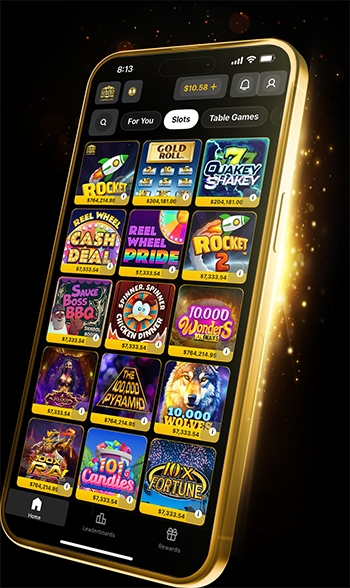
This division helps explain why the same RTG title can appear at more than one operator. It can also explain why a game may be visible in a promotional image but unavailable after sign-in. Regional rules, account settings, responsible-gambling restrictions, operator licensing and catalogue changes can all affect access. A screenshot establishes only that an image existed when it was made; it does not establish current availability.
RTG also provides games across several mechanical formats. A single supplier name can cover slots and other casino products, so the broad term does not describe one game with one set of rules. Within an individual game, the relevant mechanics may include return to player, volatility, paylines or ways to win, reel or grid behaviour, feature triggers and jackpot rules. Those details belong to the game configuration, not merely to the provider’s name.
Why one provider can serve many operators
A casino operator contracts for content from one or more studios and then presents those games within its own platform. The studio creates the gaming logic and assets; the operator controls the surrounding service. That division places separate responsibilities on each party. It is why an RTG-branded game inside a casino lobby should not be treated as evidence about the casino’s regulator, account verification process or payment arrangements.
It also means that a provider cannot be treated as a guarantee of quality across every site. Two operators may offer versions of games associated with the same studio while applying different account restrictions, promotional terms or responsible-gambling settings. Game identity and casino identity must still be checked independently.
Canadian authorization is determined at the provincial level
An RTG casino list does not tell you whether a site is legal in Canada, because authorization is determined at the provincial level instead of by the software provider. A site may run RTG slots while holding no Canadian licence at all. The list therefore identifies the games on offer, not the authority that regulates the player account.
Captain cook casino canada sign up bonus | expiry
Provincial regulators control who can serve you
Each province operates its own legal framework and assigns gaming authority to operators it approves. British Columbia, Ontario, Quebec and the Atlantic provinces each follow their own rules, so the same RTG casino can be accessible in one province and unavailable in another. A site that accepts Canadian dollars or displays a Canadian address is not evidence of authorization. Only a licence issued by the province where you play, or by a regulator whose agreement Canada recognises, grants that status. If a province does not license a particular operator, the operator cannot legally offer services to residents there.
Use the licence number and registry as the check
Treat the licence number as the primary signal. Most provincial regulators publish an operator registry where you can look up the name or licence number. Verify that the listed operator matches the site you are registering with and that the licence covers the games you intend to play. The registry may also show the licence type, validity dates and any sanctions. If the number does not appear in the registry, or the operator name differs from what the site displays, treat that as a red flag instead of a paperwork detail. A licence also does not eliminate gambling risk: it sets operational requirements but does not guarantee that you will win or that a dispute will be resolved in your favour.
1$ Deposit casino ontario minimum deposit, methods
What to compare in an individual RTG slot
The provider name is the least useful level for judging a particular slot. Once a game is open in a confirmed local catalogue, compare the rules and published mathematical characteristics of that exact game. A title may have different configurations in different jurisdictions, so the operator’s current game information screen is more relevant than a generic review or a provider-level catalogue.
RTP and house edge describe a long-run model
Return to player, or RTP, expresses the proportion of total stakes a game is designed to return to players over a very large number of rounds under its stated mathematical model. Its counterpart is the house edge, calculated as 100% minus RTP. For example, a hypothetical slot published at 96% RTP would have a theoretical 4% house edge. That does not mean every deposit will lose 4%, every session will approach the figure or a player can expect to receive $96 back from a $100 bet.
RTP is a theoretical rate, not a promise about one session. Short-term results can differ substantially because random outcomes do not arrive in a perfectly balanced sequence. A larger theoretical RTP also does not determine how quickly money is returned. Volatility, maximum stake, feature rules and the stopping point remain separate considerations.
Volatility changes the pattern, not the house edge
Volatility describes how results vary around the game’s long-run expectations. A lower-volatility game may produce smaller returns more frequently, while a higher-volatility game may produce fewer returns and less frequent larger outcomes. These labels do not automatically make one game better. The same published RTP can coexist with different volatility, and increasing a player’s stake does not alter the theoretical percentage return.
Consider a clearly hypothetical low-volatility slot with a 96% theoretical RTP. One player might stake $1 repeatedly and see an early string of small wins; another might lose many wagers before a larger feature result. Neither result disproves the stated long-run return. The session describes realized variation, while RTP describes the designed distribution over an adequately large sample.
Paylines, ways to win and feature rules
Paylines describe the paths on which matching symbols can produce a result. Ways-to-win systems often count combinations of symbols across positions instead of fixed lines. The names can look similar while representing different structures, so the rules matter more than the marketing label. Reel sizes, paytable ordering and whether winning symbols must appear from the left are all part of the calculation.
Bonus features also require careful reading. A free-spin offer may use different reels, a substitute symbol, a fixed jackpot or its own wagering condition. A maximum-win figure may apply to a feature, the base game or the full round, and it may be capped or not guaranteed. Without the exact game rules and conditions, no responsible comparison can determine the likely value of a feature.
Maximum win and jackpot figures are limits, not forecasts
A maximum win states a ceiling under particular rules; it does not state how often the top result occurs. A progressive jackpot likewise grows through contributions from activity before being awarded. The displayed amount does not establish the next player’s probability, the expected waiting time or the return of other games in the same series. Use the rules to see how the jackpot is triggered and whether there are contribution, eligibility or cap conditions.
The practical way to use Pelican’s range is to let the provider name do the sorting instead of scrolling. Pragmatic Play supplies the bulk of the fast-spinning, high-variance slots with frequent bonus triggers; NetEnt tends toward more mechanical, lower-variance play; Evolution’s slot-adjacent products belong to a different category entirely and are not a substitute for a spinning reel. Check the provider label on the thumbnail before clicking, because two games with similar names can have opposite hit rates and opposite bonus structures. This single step turns a 1,000-title list into a workable shortlist without reading a single paytable.
How to verify a Canadian casino and its RTG catalogue
Begin with provincial authority
Start with the government or designated regulator for the province where you reside, instead of with a commercial list. Look for information that identifies the legal operating entity and confirms the authorization relevant to online casino play. In Ontario, use authoritative iGaming Ontario information. In a province where the lottery corporation is the prescribed channel, check that corporation’s site and any relevant provincial regulator information.
Wild Vegas casino no deposit bonus codes | Wagering
Domain names and trading names require care. A site may use a different public-facing brand from the company named in a register. Match enough identifying information to avoid confusing two businesses, and be cautious if the operator’s information cannot be reconciled. A logo copied from a regulator or foreign licence issuer is not itself proof of authorization.
Then verify the current game lobby
After confirming the operator, check its current site for the exact title, visible rules and any regional notice. Search functions and filters may organize hundreds of games, but the game page is the stronger source for RTP, volatility, paylines or ways to win, maximum win and bonus restrictions. If those details are missing or inconsistent across pages, treat the configuration as unconfirmed instead of filling the gap with a generic provider summary.
Review account conditions before depositing
A confirmed operator name does not answer every commercial question. Before paying in money, check the current terms for identity verification, eligible payment methods, minimums, withdrawal conditions and any promotion-specific wagering requirements. Interac, e-transfer, credit card or debit card may be offered in some circumstances, but acceptance is not universal and can depend on the account, province and payment provider. Do not infer that a payment option displayed during registration will necessarily be available for every transaction or withdrawal.
KYC, meaning know-your-customer checks, is the identity-verification process used for regulatory and account-security purposes. It may require personal information and documentation before withdrawal. A legitimate operator should explain the requirements through its terms and support channels, but the exact documents and timing cannot be assumed across Canadian operators.
Coin Casino opens an account with three concrete actions: enter a working email address, choose a password strong enough to survive a brute-force attempt, and tick the boxes that accept the terms and conditions plus the privacy policy. The process is fast, but it is not automatic. Registration only creates a login; the account stays dormant until you click the link in the verification email. If that link does not arrive, check the spam folder before assuming the platform lost your message.
Use game information as a risk-control input
A game’s advertised jackpot or RTP figure is a risk-control input, not a guarantee of a session outcome.
Why the label matters more than the summary
The number printed on a game’s information page describes a long-run mathematical relationship, not a promise for the next spin. RTP expresses the portion of wagers a slot returns to players across a very large sample; a short session will almost always differ from that average. A high-RTP title can still produce a losing streak, and a lower-RTP title can pay out during a single sitting. The relevant step is therefore to treat the percentage as one factor among several, not as a reason to expect a particular result.
What to check before committing a wager
Look at the volatility rating and the paytable instead of relying on the summary figure. Volatility describes how often and how large payouts tend to be: low volatility produces smaller, more frequent wins, while high volatility produces fewer wins that are larger when they land. A player with a limited bankroll and a strict time limit should favour lower volatility, because the game’s pace and the size of typical payouts are the variables that determine how long the bankroll lasts. A player chasing a large win and willing to accept long dry periods may prefer higher volatility, accepting that the bankroll can be exhausted quickly.
Use a small stake relative to the bankroll and set a session limit before the first wager. The game’s information page can then serve as a planning input — it tells you how quickly a bankroll may decline under high volatility, and what to expect from the paytable — while the stake and the session limit do the actual work of keeping the session within bounds.
Ruby Slots carries more than 400 titles from Realtime Gaming, which means its library is a single supplier’s work instead of a stitched-together catalogue. You will find classic three-reel slots, video slots with bonus rounds, video poker, a handful of table games, and progressive jackpots, all running on the same software engine. That uniformity cuts down on quirks: the same graphics framework, the same game launcher, and the same betting range structure across most of the grid. It also narrows your choices, since you cannot hunt for a provider you specifically prefer or compare RTP behaviour across studios. Realtime Gaming’s catalogue leans heavily on straightforward slot mechanics, so if you want experimental slots or titles with unusual features you will find them sparse here. The progressive jackpot pool is where the library offers its most tangible upside, because a portion of every wager feeds a growing top prize that can outpace standard paytables. Before committing real money, spin a few titles in demo mode to confirm the sound, the animation speed, and the bonus-trigger frequency match what you enjoy.
Frequently asked questions
Why does an RTG game show in an ad but not load after I sign in?
A promotional image often reflects the catalogue at the time the offer was approved, not your account’s current view. Access depends on your province, whether the operator holds a licence there, and the specific payment method linked to your account. Check the game’s page for a regional lock message instead of assuming the operator removed it.
I still dispute a published result after checking the game information.
The game information panel shows the theoretical return and pay structure; it does not record your session’s individual spin outcomes. A dispute about a specific result needs the operator’s session log, which only the account statement from your payment provider or the operator’s transaction history can supply. If the two records disagree, that gap is what you report.
Recognise when a casino option no longer fits your budget
Spending should stop the moment an RTG casino option stops matching your budget. A practical signal is chasing losses to recover them or borrowing to keep playing; either means the site no longer fits. Set a deposit cap and a time limit before starting, then treat any breach as a stop instead of a reason to adjust the limit upward. If you cannot stick to those boundaries, log out and walk away. The minimum legal age and your provincial regulator apply, and a national self-exclusion scheme is available. One real help line is 1-866-531-2600. Never gamble with money you need for essentials, and never chase losses.

